
How Long Does a Bulkhead Last? Lake Conroe Material Guide
How long does a bulkhead last? The honest answer depends on the material: steel runs 30-50 years, vinyl 25-35 years, treated wood 20-30 years, and FRP composite 50+ years. Here’s the full breakdown, plus what to watch for as a wall ages.
How Long Does a Bulkhead Last? Lifespan by Material
Steel Sheet Pile Bulkheads: 30-50+ Years
Steel is the most common bulkhead material on Lake Conroe because of its strength and ability to handle the wave action and water level fluctuations common on larger Texas lakes. Properly installed steel bulkheads with quality anti-corrosion coating last 30-50 years with minimal maintenance. Without proper coating, corrosion can begin within 10-15 years in fresh water.
Vinyl Sheet Pile Bulkheads: 25-35 Years
Vinyl (PVC) sheet pile doesn’t corrode, rust, or rot. High-quality vinyl bulkheads last 25-35 years with virtually no maintenance. The tradeoff is upfront cost – vinyl typically runs more than steel – but the total lifecycle cost often favors vinyl when you factor in no re-coating requirements and no corrosion concerns.
FRP Composite Sheet Piling: 50+ Years
FRP (fiberglass-reinforced polymer) composite sheet piling by Creative Pultrusions is G&C’s premium option. It combines steel-grade structural strength with full corrosion resistance – it won’t rot, rust, or absorb water. Engineered for a 50+ year service life, FRP composite is the right choice for high-exposure shorelines and homeowners who want the longest-lasting solution available.
Treated Wood Bulkheads: 20-30 Years
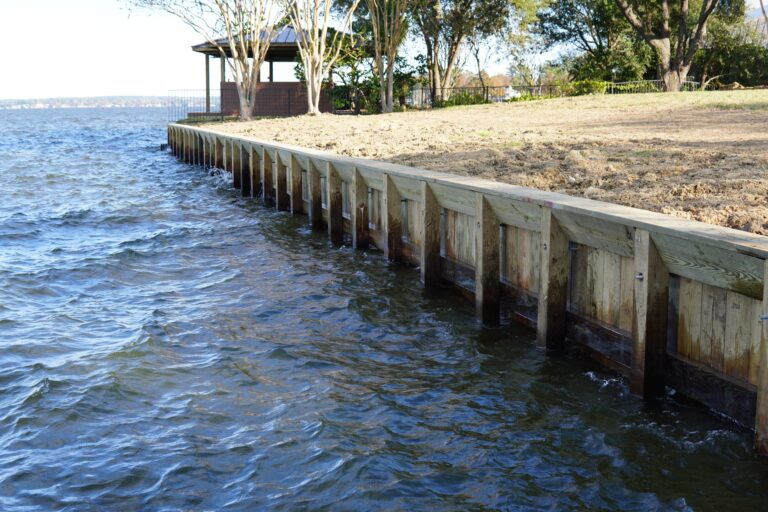
Treated wood (.60 CCA pressure-treated lumber rated for ground contact and aquatic use) is the most widely used bulkhead material for residential lake properties. Cost-effective and proven for calmer, lower-traffic waterways, a properly maintained wood bulkhead lasts 20-30 years. Many homeowners who replace wood bulkheads upgrade to steel, vinyl, or FRP composite for a longer service life.
Signs Your Bulkhead Is Failing
- Leaning or bowing: The wall is moving under soil pressure from behind
- Soil loss behind the wall: Water washing soil through gaps indicates the wall is breached
- Rusting or corrosion on steel: Surface rust is cosmetic; deep corrosion is structural
- Rotting wood: Soft spots, dark discoloration, or visible decay
- Settling above the wall: Land dropping toward the water indicates soil movement
Can a Failing Bulkhead Be Repaired?
Sometimes, yes. Minor issues like a section that’s starting to lean, a small area of corrosion, or a failed tie-back anchor can often be addressed with targeted repair rather than full replacement. G&C evaluates every failing bulkhead and gives you an honest assessment of whether repair or replacement is the better long-term value.
In many cases, partial replacement is the right answer: replace the damaged sections now and plan for full replacement in 5-10 years as the rest of the wall reaches end of life.
How to Extend Your Bulkhead’s Life
- Keep vegetation away from the top of the wall – roots can move and weaken it
- Maintain proper drainage behind the wall so water pressure doesn’t build up
- Inspect annually for signs of movement, corrosion, or gaps
- Don’t load the area behind the wall with heavy equipment or fill
- Re-coat steel bulkheads every 10-15 years (check the SJRA if a repair or replacement requires a new permit)
If you’re unsure about the condition of your bulkhead, contact G&C for a free bulkhead assessment. We also handle dock and bulkhead repairs and full bulkhead replacement. We’ll tell you honestly what’s there and what it needs – no pressure, no sales pitch.
Call us: 832-935-2554